Civil Engineer
Technology & Design
Designs the grading, drainage, and utility systems that make a site buildable before anyone can pour a foundation, the single biggest missing career on a site full of concepts that assume this role exists.
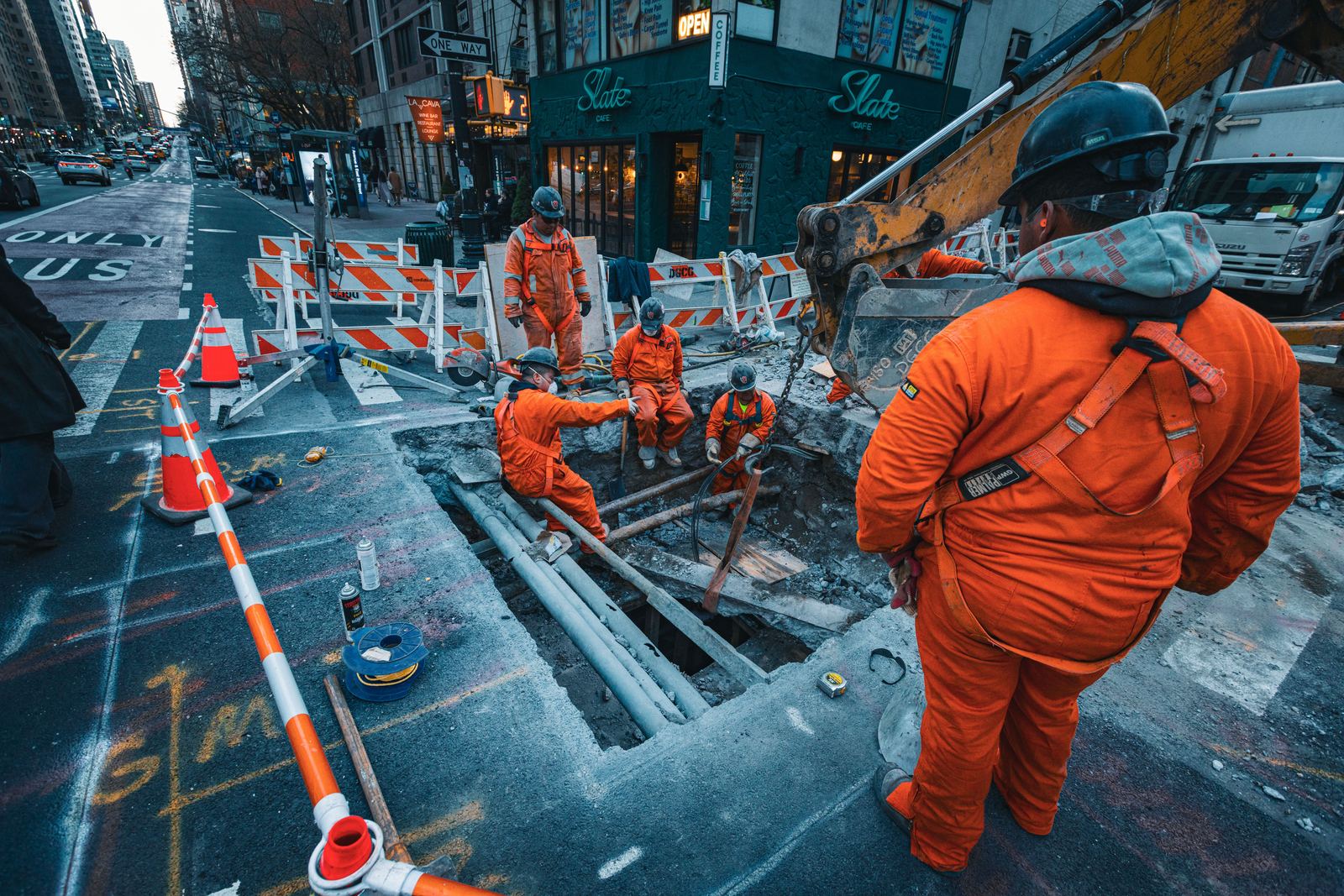
What is a Civil Engineer?
A Civil Engineer designs the site-level systems a building depends on before construction can start: grading and earthwork, storm and sanitary drainage, water and utility service, and paving. On a typical project, civil engineering work happens early, during design and permitting, producing the site plans and utility drawings that a Site Superintendent, Surveyor, and Heavy Civil Estimator all work from once construction begins. Unlike most careers on this site, civil engineering is a licensed profession: stamping site design drawings legally requires a Professional Engineer (PE) license.
What they do
- Design grading and drainage plans that route stormwater safely off a site
- Design water, sanitary sewer, and storm utility systems and their connections to public infrastructure
- Prepare site plans and civil drawings for permitting and construction
- Perform hydrology and hydraulic calculations to size drainage and detention systems
- Coordinate with geotechnical engineers, surveyors, and architects on site constraints
- Review RFIs and field conditions during construction that affect the civil design
A typical day
- 8:00 AMReview a geotechnical report to confirm site soil assumptions for a grading design
- 9:30 AMRun hydraulic calculations to size a stormwater detention pond for a new site plan
- 11:30 AMCoordinate with a surveyor on updated topographic data for an active design
- 1:30 PMRespond to an RFI from the field about an unexpected utility conflict
- 3:00 PMReview permit comments from the local jurisdiction and revise the site plan accordingly
Skills
Software
Education
- Required:
- A bachelor's degree in civil engineering from an ABET-accredited program, then passing the Fundamentals of Engineering (FE) exam to become an Engineer in Training, then typically four years of progressive experience under a licensed PE before sitting for the Professional Engineer (PE) exam. A PE license is legally required to stamp civil design drawings submitted for permit.
- Not necessary:
- A background in construction trades; most civil engineers come directly from an engineering degree program
Career progression
- 1.Engineer in Training (EIT)
- 2.Civil Engineer
- 3.Senior Civil Engineer or Project Engineer (design firm side)
- 4.Principal Engineer or Engineering Manager
Who hires for this role
Explore next